Buying A SoHo Cast-Iron Loft: Key Considerations
June 25, 2026
June 25, 2026
Thinking about buying a SoHo cast-iron loft? It is easy to fall for the drama of tall ceilings, oversized windows, and the unmistakable character of these buildings. But in SoHo, charm and complexity often come as a package. If you want to buy with confidence, you need to understand how historic status, building systems, occupancy rules, and renovation approvals can affect your decision. Let’s dive in.
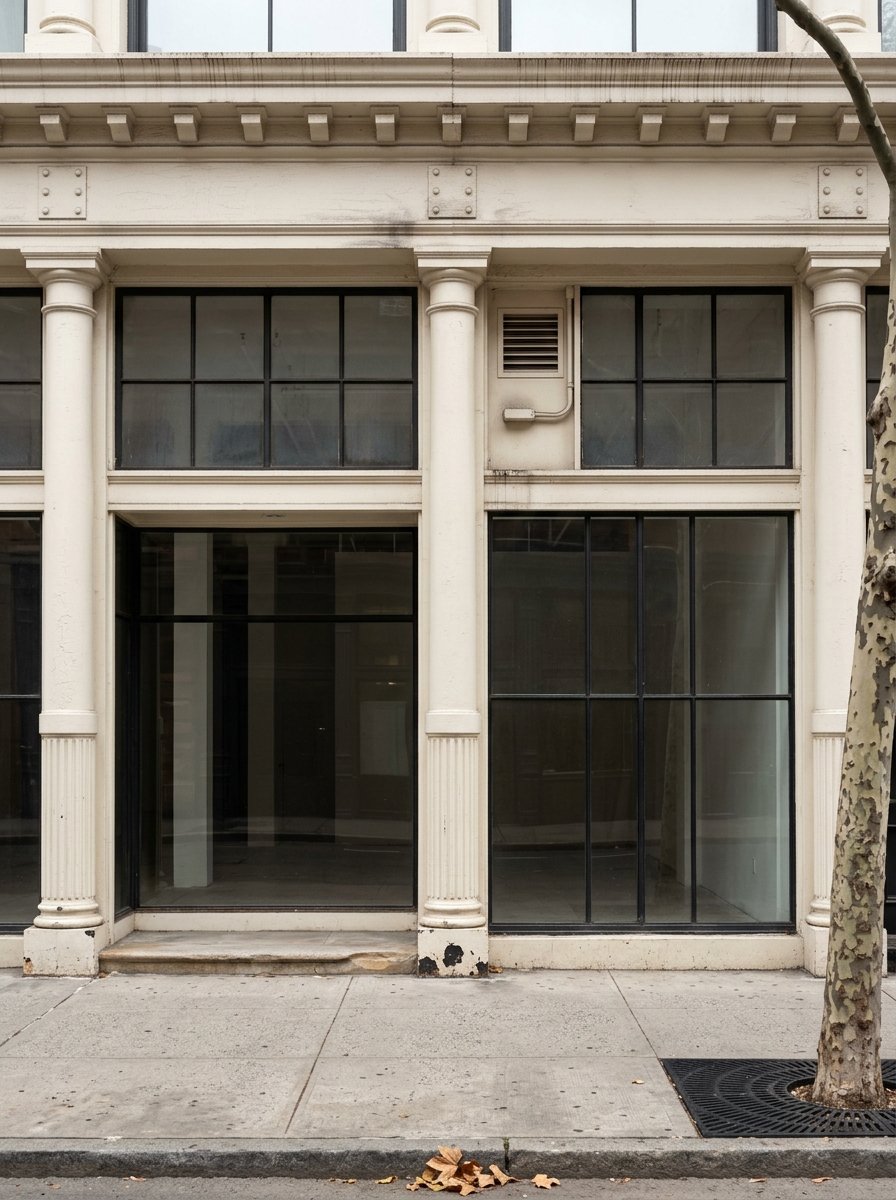
SoHo’s loft market is shaped by the SoHo-Cast Iron Historic District, which the Landmarks Preservation Commission designated on August 14, 1973. The district protects about 500 buildings across 25 city blocks. That history matters because it helps explain why SoHo feels so visually distinct from many other Manhattan neighborhoods.
These buildings began as post-Civil War store-and-loft structures used by wholesale dry-goods merchants and manufacturing firms. Over time, the area also became associated with artists before evolving into one of Manhattan’s most sought-after residential and commercial neighborhoods. When you buy here, you are not just buying square footage. You are buying into a very specific building type and regulatory context.
Cast-iron construction also helped make larger windows practical, which supported more daylight in commercial buildings. Combined with the large, high-ceilinged loft spaces described by the LPC, that often translates into a sense of volume and openness that feels very different from a more conventional apartment layout. For many buyers, that is the draw.
A SoHo loft can feel spectacular the moment you walk in, but layout deserves just as much attention as ceiling height or finishes. Because many of these buildings were originally designed as store-and-loft properties, interiors often feel broad and open rather than divided into standard apartment rooms. That can be a major advantage, but it can also create tradeoffs.
Pay close attention to room depth, column placement, and how far interior rooms sit from the window wall. In a classic loft, the perimeter light may be excellent while interior areas feel more dependent on borrowed light or artificial lighting. A beautiful great room does not always mean every part of the home lives equally well.
It also helps to think about how you actually use space. If you need privacy for a home office, separate sleeping areas, or a more defined entertaining layout, a loft’s openness may need to be balanced against practical daily use. In SoHo, the best fit is often the unit that matches your lifestyle, not just the one with the most dramatic scale.
Street exposure can change the feel of a loft in a meaningful way. The current Special SoHo-NoHo Mixed Use District is intended to broaden housing choices, retain mixed-use character, and support arts and creative uses while preserving substantial commercial and manufacturing space. In practical terms, that means the experience of a street-facing unit may differ sharply from a rear-facing or side-facing unit.
A street-facing loft may offer iconic views, stronger natural light, and a more direct connection to the neighborhood. It may also come with more street activity and a different sound profile. A rear-facing loft may feel quieter or more insulated, but sometimes at the cost of light or outlook.
This is where in-person due diligence matters. You want to assess the unit at different times of day if possible and understand how exposure affects both livability and resale appeal. In a neighborhood defined by mixed use, exposure is not a small detail.
Tribeca is often the closest comparison buyers make, but the floor-plan rhythm can be different. Tribeca’s Special Mixed Use District also balances light manufacturing, controlled residential use, and housing opportunity. In Tribeca South, store-and-loft buildings are often organized around a 25-foot module or wider joined configurations, which can create a different layout pattern from a classic SoHo cast-iron loft.
That does not make one better than the other. It simply means your expectations should be neighborhood-specific. If you are comparing loft options across SoHo and Tribeca, look closely at window lines, structural spacing, and how the floor plan actually functions, not just the asking price or total square footage.
In older loft buildings, mechanical systems and modernization history deserve serious attention. The LPC designation report notes that these buildings were renovated over time to address water towers, fire escapes, additional exits, safer elevators, and improved plumbing. For a buyer, that means the building’s upgrade history can be just as important as the apartment’s finishes.
Ask targeted questions about the elevator, plumbing, electrical service, roof, façade, and HVAC maintenance. A beautifully renovated interior does not eliminate the need to understand what is happening at the building level. In older loft stock, deferred capital work can shape your ownership experience in a big way.
Landmarked properties must also be kept in a state of good repair, and the LPC can issue violations if neglect damages significant features. That is another reason to review the building’s condition with care. In SoHo, stewardship of the building itself is part of the value equation.
If you plan to renovate, landmark status should be one of your first checkpoints. In historic districts, most exterior façade changes require LPC review. Even when a project does not require Department of Buildings approval, it may still require an LPC permit.
LPC says ordinary repairs like replacing broken window glass or repainting the exterior the same color generally do not need approval. But storefront installations, awnings, signage, lighting, and interior work that affects the exterior can all trigger LPC review. If your vision includes changing windows, modifying a façade condition, or altering anything visible from outside, approvals may shape your timeline and budget.
This is where clarity upfront can save time later. Before you assume a post-closing renovation will be simple, confirm what approvals may be required and whether the building has any additional internal review process.
One of the most important parts of SoHo loft due diligence is understanding exactly what type of unit you are buying. The regulatory framework changed on December 15, 2021, when the City Council approved the SoHo/NoHo Neighborhood Plan, created the Special SoHo-NoHo Mixed Use District, and replaced the old M1-5A and M1-5B designations with M1-5.
That planning change was intended to allow a wider range of residential, commercial, and community uses while also protecting arts and creative activity. Even so, buyers should not assume every loft is a standard residential apartment with the same occupancy and renovation rules. In SoHo, legal status can vary in ways that matter.
Some units may still be treated as Joint Living-Work Quarters for Artists, or JLWQA. Conversion to general residential use can require CPC chairperson certification, a one-time non-refundable contribution to the SoHo-NoHo Arts Fund, Department of Buildings filing, and a certificate of occupancy. Existing JLWQA occupancy may continue if the occupant is a DCLA-certified artist or otherwise legally entitled to occupancy.
Other buildings may fall under Loft Board jurisdiction as Interim Multiple Dwellings, or IMDs. In those cases, owners must obtain a residential certificate of occupancy and meet Department of Buildings and Article 7-B milestones, with the Loft Board overseeing legalization. That path is different from buying a standard residential condo or co-op.
Before you move forward, make sure your review is grounded in the right documents and approvals. In a SoHo loft purchase, a few items can answer major questions about risk, flexibility, and future plans.
Here is a practical checklist to keep in mind:
This kind of review is especially important if you are buying for a specific use case, such as long-term primary residence, pied-à-terre, or investment planning. In SoHo, assumptions can be expensive.
Buying a cast-iron loft is rarely a cookie-cutter Manhattan purchase. The appeal is real, but so is the need for precise diligence. Historic district rules, occupancy classifications, and building-level maintenance all deserve careful review before you commit.
That is why buyers in SoHo benefit from calm, detail-oriented guidance. When you understand the building, the paperwork, and the approval landscape, you can evaluate a loft on more than looks alone. You can judge whether it truly fits your goals, your timeline, and your tolerance for complexity.
If you are considering a SoHo loft and want strategic guidance tailored to the building and unit you are evaluating, Sonal Patel can help you approach the process with clarity and confidence.
Her experience, expertise, and engaging personality make Sonal the perfect combination of advisor, advocate, and strategist. She is the proud owner of several NYC properties and a skilled negotiator with a deep understanding of people and sharp instincts about market trends.