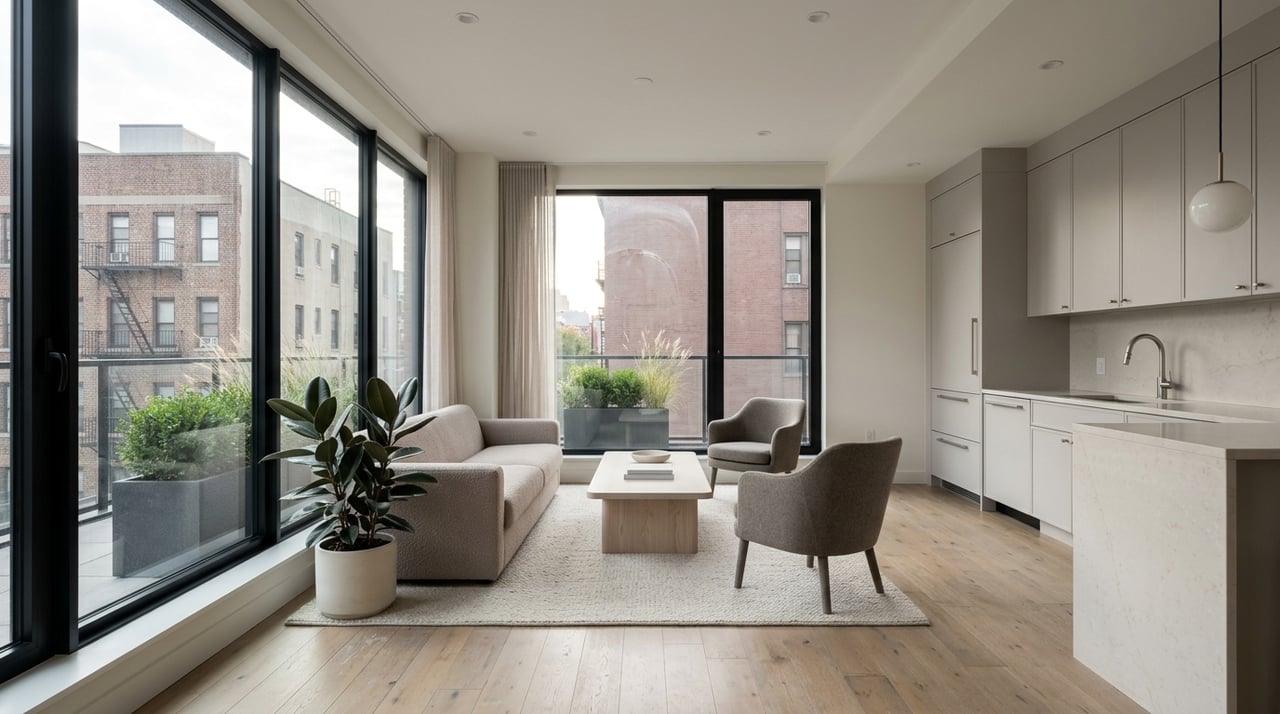
High Line Condo Living In Chelsea, Manhattan
June 4, 2026
June 4, 2026
Wondering what it’s really like to live in a condo near the High Line in Chelsea? The appeal is easy to see, but the day-to-day experience is more specific than a simple luxury label. If you are weighing a move, an investment, or a resale purchase in this part of Manhattan, understanding how the neighborhood functions block by block can help you make a smarter decision. Let’s dive in.
High Line condo living in Chelsea is shaped by a rare mix of public space, cultural activity, and modern residential development. The corridor sits within West Chelsea, an area city planning documents describe as a dynamic mixed-use neighborhood with commercial art uses, residential buildings, loft structures, and newer towers.
That mix matters because it changes how the neighborhood feels from one street to the next. In practical terms, you are not just buying a condo in Chelsea. You are choosing between a park-edge setting, a midblock arts corridor, or a quieter interior street with a different daily rhythm.
The High Line itself is a major part of that identity. Built on a former freight rail structure, the elevated park stretches 1.45 miles from Gansevoort Street to West 34th Street between Tenth and Eleventh Avenues, with more than 350 species of plantings and over 450 public programs and activities each year.
Living near the High Line often means your routine is built around walking. You can start the morning with a park stroll, fit in time by the waterfront, stop for coffee or errands, and still stay within a compact section of the neighborhood.
Chelsea Market adds to that convenience. Located at 75 Ninth Avenue, its concourse is open daily from 7:00 AM to 10:00 PM, which supports everything from quick breakfast runs to evening food stops.
The waterfront is another major part of the lifestyle. Hudson River Park extends four miles along Manhattan’s west side, covers 550 acres, and draws more than 17 million visits annually. In the Chelsea section, destinations include Chelsea Waterside Park and Chelsea Piers, giving the area a strong recreation component.
That means your neighborhood routine can include more than just city errands. Chelsea Waterside Park includes a permanent picnic area, a public restroom facility, an expanded synthetic turf field, and an expanded dog park, while Chelsea Piers offers a large waterfront sports complex between 17th and 23rd Streets.
West Chelsea remains one of Manhattan’s main contemporary art districts. City planning materials note that galleries are concentrated primarily on the midblocks between West 20th and West 27th Streets, often in converted loft buildings and garages.
For you as a buyer, that means the arts scene is part of daily neighborhood life, not just a weekend attraction. Gallery openings, exhibition turnover, and regular visitor traffic help shape the feel of the area, especially on those midblock streets.
This cultural layer gives High Line living a distinct character. It can feel more active and destination-driven than a purely residential enclave, which is important to understand before you choose a specific building or block.
One reason High Line-adjacent Chelsea works so well for full-time living is its transit access. Nearby subway options include the 1 train on Seventh Avenue at 14th Street, 23rd Street, 28th Street, and 34th Street-Penn Station, along with the E line at 14th Street, 23rd Street, and 34th Street-Penn Station.
You also have the A train at 14th Street and 34th Street-Penn Station, the L train at the 8 Av/14 St station complex, and the 7 train at 34 St-Hudson Yards. That range gives you strong north-south access as well as an easy connection to the Far West Side.
Crosstown travel is also easier than many buyers expect. The M23-SBS runs along 23rd Street, and the M14A/M14D-SBS run along 14th Street, which helps with east-west movement without always needing a subway transfer.
Accessibility is another practical plus. The MTA says the 14 St station complex is now fully accessible with nine elevators, and the 34 St-Hudson Yards station is also ADA accessible.
One of the clearest features of newer High Line-area condos is the scale of their amenity packages. In some buildings, amenities go far beyond a basic gym or part-time doorman setup and begin to function as an extension of your home.
For example, One High Line includes a 75-foot lap pool, fitness center, private training rooms, steam and sauna rooms, a children’s playroom, a golf simulator, valet parking garage, and service offerings that include housekeeping and in-residence dining. At 520 West 28th Street, listed amenities include a 24-hour concierge, a 75-foot skylit pool, a private spa suite, fitness center, private screening room, entertainment suite, High Line terrace, personal storage, and automated parking.
The bigger point is not the brand name of any one building. It is that amenity packages in this corridor can materially affect how you live, where you exercise, how you entertain, and how much of your daily routine stays inside the building.
This is where buyers need to be precise. High Line condo living is not uniform across Chelsea, even within a relatively tight geographic area.
City planning materials describe West Chelsea as a place with large loft buildings, walkups, and towers, with residential use heaviest east of Tenth Avenue and art-related uses concentrated on the midblocks and along Eleventh Avenue. That means two condos with the same neighborhood label can offer very different living experiences.
A home directly on the park edge may deliver immediate High Line access and dramatic views, while an interior block may feel more tucked away. A newer full-service tower may support an amenity-heavy lifestyle, while a converted loft building may offer a different scale, layout, and day-to-day feel.
The same features that make this area attractive also make it active. The High Line’s year-round programming, Hudson River Park’s large visitor volume, Chelsea Market’s long daily hours, and the gallery district’s regular foot traffic all point to a neighborhood with significant public use.
For many buyers, that energy is part of the draw. You get park access, waterfront recreation, dining, art, and strong transit in one of Manhattan’s most connected west side locations.
Still, it is wise to think beyond the headline appeal. If you prefer a more private or quiet residential setting, the exact block, orientation, and building type deserve close attention during your search.
The neighborhood did not evolve by accident. The zoning framework for the Special West Chelsea District was designed to support mixed-use development, arts-related uses, the High Line’s reuse as public open space, and a transition between the lower-scale Chelsea Historic District and the taller Hudson Yards area.
The High Line transfer corridor was also intended to preserve light, air, and view corridors from the High Line bed. For you as a buyer, that helps explain why the built environment around the park looks and feels the way it does.
In other words, the appeal of this area is not just the park itself. It is also the way the neighborhood’s planning framework shaped nearby buildings, views, and the balance between public space and private residential use.
This part of Chelsea often appeals to buyers who want a highly walkable Manhattan lifestyle with strong cultural and recreational access. If you value being near the waterfront, contemporary art, transit, and amenity-rich buildings, the corridor can be a strong fit.
It may also appeal to buyers who want a modern condo product rather than a more traditional co-op or townhouse setting. Depending on the building, you may find a level of service and convenience that changes how much time and effort your daily routine requires.
The key is to match the building and block to the life you actually want. In this micro-market, details matter, and a well-chosen property can feel very different from another one just a few streets away.
If you are considering a purchase or evaluating resale opportunities in Chelsea, working with an advisor who understands the neighborhood at the block and building level can make a meaningful difference. For tailored guidance on Chelsea condos and central Manhattan resale strategy, connect with Sonal Patel.
Her experience, expertise, and engaging personality make Sonal the perfect combination of advisor, advocate, and strategist. She is the proud owner of several NYC properties and a skilled negotiator with a deep understanding of people and sharp instincts about market trends.