Raising A Family In Tribeca Condos And Lofts
July 2, 2026
July 2, 2026
Looking for room to grow in Manhattan without giving up the energy of downtown? That is exactly why many buyers consider Tribeca when they want a family-friendly home with more space, strong daily conveniences, and an easy rhythm built around parks, schools, and walkability. If you are weighing Tribeca condos and lofts for your next move, this guide will help you understand how family life here actually works. Let’s dive in.
Tribeca stands out because its housing stock feels different from many other Manhattan neighborhoods. Much of the area sits within protected historic districts, including Tribeca East, North, South, South Extension, and West, which helps preserve the neighborhood’s character and shapes the kind of homes available.
In practical terms, that often means large-format loft conversions and boutique condominium buildings instead of endless small, high-turnover apartment inventory. In the Tribeca South Historic District, many buildings are described as store-and-loft structures, often with cast-iron storefronts and upper façades in brick, stone, or cast iron.
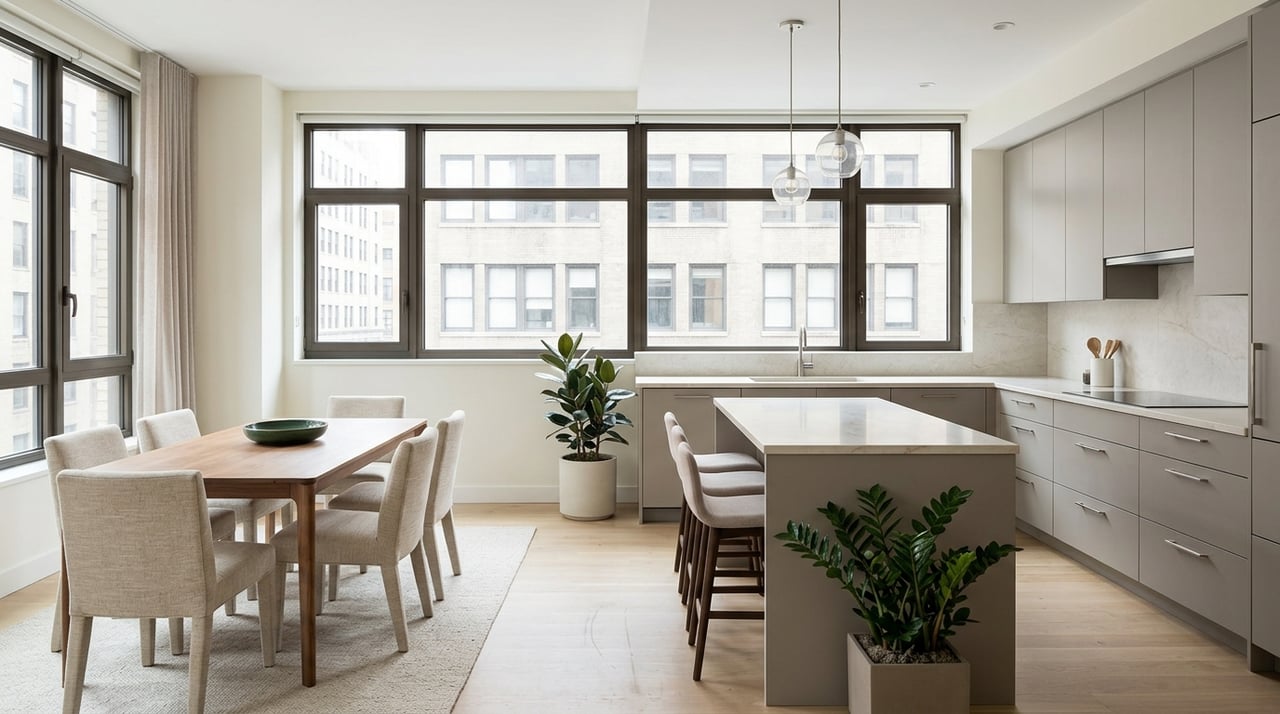
For a growing household, that built environment can be a real advantage. Rather than searching through building after building of compact layouts, you are more likely to find residences with generous floor plans, distinctive proportions, and a stronger sense of separation between living, sleeping, and work space.
One of Tribeca’s biggest draws is scale. Family buyers are often not just looking for another bedroom. You may also want room for storage, a play area, a home office, or simply wider common spaces that make daily life easier.
Several notable buildings reflect that pattern. 443 Greenwich has 53 condominium residences and includes floor plans such as a 3-bedroom, 3-bathroom home with 3,126 square feet. 93 Worth markets spacious 3-bedroom and penthouse loft residences, while 56 Leonard offers 145 for-sale residences in a full-service tower setting.
That mix gives you a helpful framework for your search. In Tribeca, family inventory often shows up in two forms:
If you are comparing neighborhoods, this is one of Tribeca’s clearest strengths. You are not only buying square footage. You are often buying a layout that supports the way your household lives day to day.
In a neighborhood where many residents value convenience and privacy, building amenities can play a big role in quality of life. This is especially true when you are managing school schedules, weekend routines, strollers, bikes, and the constant logistics that come with family life.
443 Greenwich is a strong example of family-oriented amenities. The building offers 15 private on-site parking spaces, a 75-foot lap pool, a 5,000-square-foot roof deck with active areas for children, a children’s playroom, bike storage, and 24-hour concierge and doorman service.
93 Worth also speaks directly to this style of living. The building highlights a landscaped roof deck, fitness center, children’s playroom, and dog washing station, alongside generous three-bedroom layouts made possible by large original floor plates.
If you prefer a taller, amenity-rich building, 56 Leonard shows the tower version of family living in Tribeca. Amenities there include a library lounge, indoor and outdoor theater, 75-foot infinity-edge lap pool, landscaped sundeck, yoga studio, and conference center.
The most helpful amenities are not always the flashiest. For many buyers, the real value is in the features that reduce friction every day.
These often include:
When you look at condos and lofts in Tribeca, it helps to evaluate amenities through a family lens. Ask yourself what will make a Tuesday morning or a winter weekend easier, not just what looks impressive in a brochure.
For many families, the real test of a neighborhood is what happens outside the building. Tribeca performs well here, thanks to a strong mix of local parks, waterfront recreation, and play spaces that support both quick outings and longer weekend routines.
Washington Market Park is one of the clearest examples. Located at Greenwich and Chambers, it includes a community garden, three playgrounds, a grand lawn, basketball courts, a tennis court, a butterfly garden, a gazebo, and comfort stations. It is open daily from 7 a.m. until dusk.
That kind of park infrastructure matters because it gives you options. A quick playground visit, a longer afternoon on the lawn, or a casual meet-up with other local families can all fit into the same neighborhood routine.
Hudson River Park expands that routine even further. Pier 25 Playground offers swings, climbing structures, water features, shaded seating, a turf field, a mini golf course, and even a historic vessel to explore.
Nearby, Pier 26 provides a different experience. This 2.5-acre ecologically themed pier includes a sunning lawn, sports play area, boardwalks, the Tide Deck, food options, and restrooms. Access is supported by nearby transit, including the M20 and the 1, 2, 3, A, C, and E lines.
Taken together, these spaces give Tribeca a more layered outdoor life than many buyers expect in Manhattan. You have neighborhood green space, structured playground time, and a riverfront setting that can easily become part of your weekly family rhythm.
One reason families stay in Tribeca is that daily logistics can be relatively straightforward. The neighborhood sits within NYC Public Schools District 2, and several school and preschool options are located within the area’s central street grid.
P.S. 234 Independence School at 292 Greenwich Street serves grades K through 5. The school page also notes a partially accessible building at 292 Greenwich Street and a fully accessible building at 200 Chambers Street.
For preschool and 3K, the Department of Education lists multiple neighborhood options, including NY Preschool TriBeCa at 88 Leonard Street, CPC-Tribeca Early Learning Center at 21 St. John’s Lane, 5 Point Family/Kiddie Academy of Tribeca at 72 Reade Street, and Tribeca Kindercare at 311 Greenwich Street.
The practical takeaway is simple. In Tribeca, many families can build a routine around walking rather than relying on a car for every drop-off, pickup, or park stop. That can make a major difference in how manageable your week feels.
Space and convenience matter, but they are not the whole story. Families also want a neighborhood that feels connected, active, and easy to engage with.
Taste of Tribeca is one of the strongest examples of that local culture. Founded in 1994 by parents from P.S. 234 and P.S. 150, this annual outdoor fundraiser is run entirely by parent volunteers, brings together chefs from more than 50 neighborhood restaurants, and includes both a Kids’ Zone and Sports Zone.
That says a lot about how Tribeca functions. It is not just a place with large homes and nice amenities. It also has a visible parent-driven community structure that shapes neighborhood life in a practical, welcoming way.
Tribeca also has a broader cultural identity that supports family life over time. The annual Tribeca Festival brings programming across narrative and documentary competitions, Spotlight+, Tribeca Talks, Tribeca Games, podcasts, and immersive experiences.
For residents, that means the neighborhood offers more than residential comfort. It also creates opportunities to stay engaged with the city’s creative energy without leaving your immediate area.
Tribeca’s appeal comes with a clear tradeoff. Because much of the neighborhood is landmark-protected, buyers should expect fewer generic new-build options and more homes shaped by historic envelopes, loft conversions, and carefully controlled development.
That can be a positive if you value character, scale, and architectural identity. Still, it also means inventory may be more limited, more distinctive, and less interchangeable than in neighborhoods dominated by newer development.
For buyers, that raises the importance of strategy. When the right family-sized condo or loft comes to market in Tribeca, it often checks boxes that are hard to replicate elsewhere in Manhattan.
If you are actively searching, focus on the features that support your household now and a few years from now. Tribeca can offer impressive homes, but the best choice is the one that matches your actual routine.
Prioritize factors like:
A smart search in Tribeca is rarely about chasing the newest finish package alone. It is about finding a home where space, building function, and neighborhood access work together.
Tribeca is not a one-size-fits-all market. The neighborhood’s inventory spans historic loft conversions, boutique condominiums, and amenity-rich towers, each with its own tradeoffs around layout, services, privacy, and availability.
If you are buying for your family, it helps to have an advisor who understands how to evaluate not only the home, but also the daily experience that comes with it. In a market where distinctive properties can move quickly and details matter, clear guidance can help you narrow your options with more confidence.
If you are considering a move to Tribeca or planning your next step within the neighborhood, Sonal Patel can help you evaluate condos and lofts with the strategic, neighborhood-focused guidance that makes a complex search feel more manageable.
Her experience, expertise, and engaging personality make Sonal the perfect combination of advisor, advocate, and strategist. She is the proud owner of several NYC properties and a skilled negotiator with a deep understanding of people and sharp instincts about market trends.